
Planning your first European river cruise and torn between the Danube and the Rhine? You’re definitely not alone. These two iconic rivers are the most popular river cruise destinations in Europe, and choosing the right one can truly shape your travel experience. Whether you dream of majestic castles or grand capitals, cozy vineyards or bustling Christmas markets, this guide will help you find the perfect cruise to match your desires.
Having personally cruised both the Danube and the Rhine multiple times on five different river cruise lines — including Viking, AmaWaterways, Avalon, Uniworld, and Tauck — we’re sharing firsthand insights on everything you need to know. From scenic highlights and cultural treasures to flight logistics and cruise line recommendations, here’s your ultimate comparison to confidently pick your next river cruise adventure.
Why Focus on the Danube and Rhine?
Europe boasts many beautiful rivers perfect for cruising, like the Douro in Portugal, the Rhone, the Saone, the Elbe, and the Moselle. But for first-timers, the Danube and the Rhine are the top two rivers to consider. Nine and a half times out of ten, travelers find their ideal European river cruise on one of these two. Other rivers are fantastic but are best saved for return trips.
Overview of the Rhine River
The Rhine River flows generally north to south, stretching from Amsterdam in the Netherlands down to Basel in Switzerland, with some variations along the route. Rhine cruises are known for charming, small old-world towns like Rüdesheim, Cologne, and Strasbourg, surrounded by vineyards and dotted with storybook castles. If you love pulling right up to quaint towns and soaking in medieval history, the Rhine offers a picturesque and scenic experience.
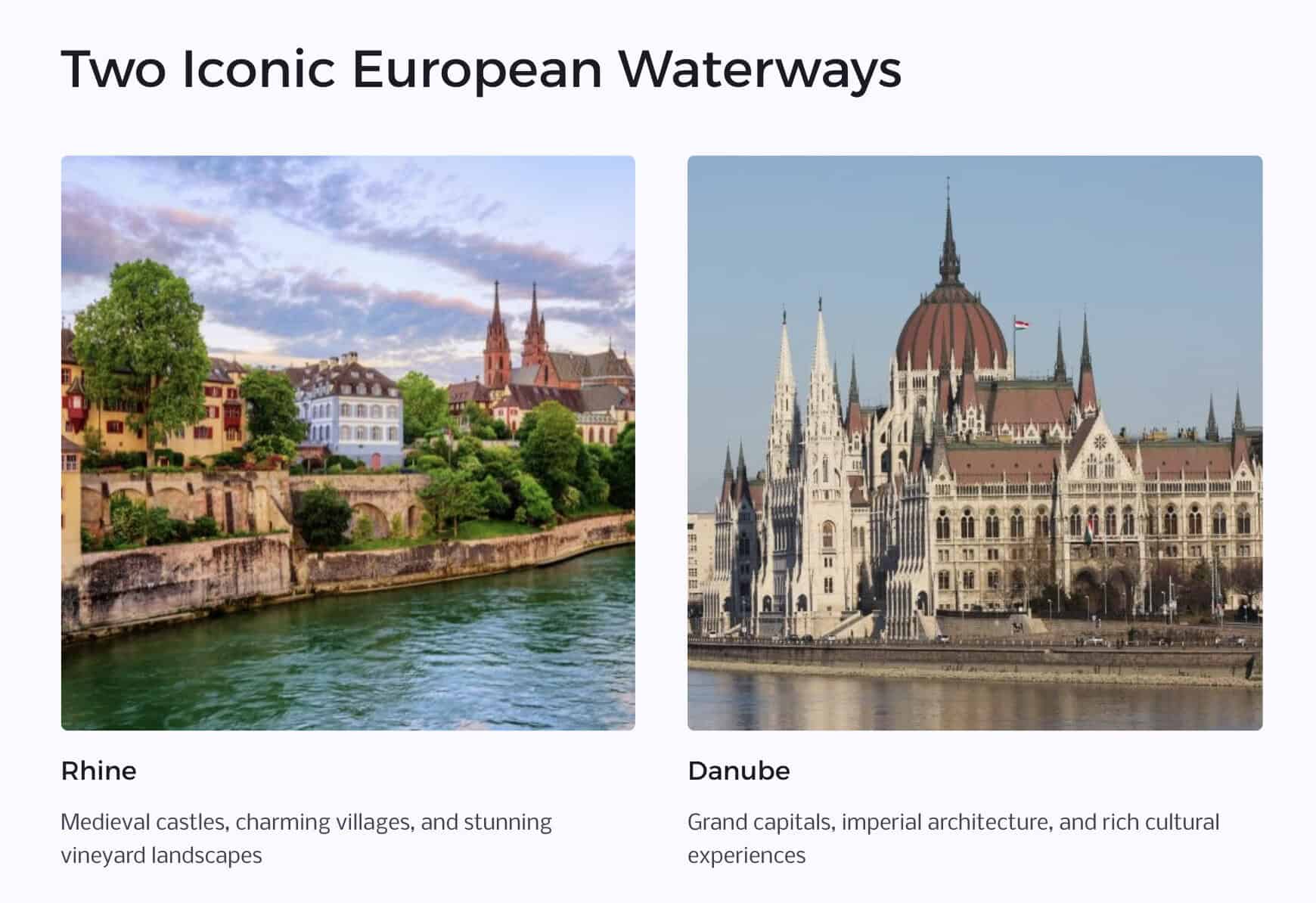
Most Rhine itineraries last about seven to ten days, often starting or ending in Amsterdam or Basel, with easy access to Zurich for onward travel. The river is also famous for its Christmas markets, making it a top choice for holiday cruises. If you thrive on cozy towns, scenic cruising, and wine regions, the Rhine is likely to steal your heart.
Overview of the Danube River
The Danube flows east to west, passing through several Central European countries including Germany, Austria, Slovakia, Hungary, and sometimes others. This river cruise route is often called the “grand capitals” itinerary because it features spectacular cities like Vienna, Budapest, and Bratislava, rich in architecture, culture, and history.
Danube cruises typically last seven to eight days and provide an immersive experience into the Austro-Hungarian Empire vibe. Along the way, you’ll see stunning bridges, palaces, cathedrals, and hidden gems. Starting or ending your journey in Budapest is a major plus — it’s one of Europe’s most scenic and vibrant capitals, with its iconic river views and cultural landmarks.
Pros and Cons: Rhine vs Danube
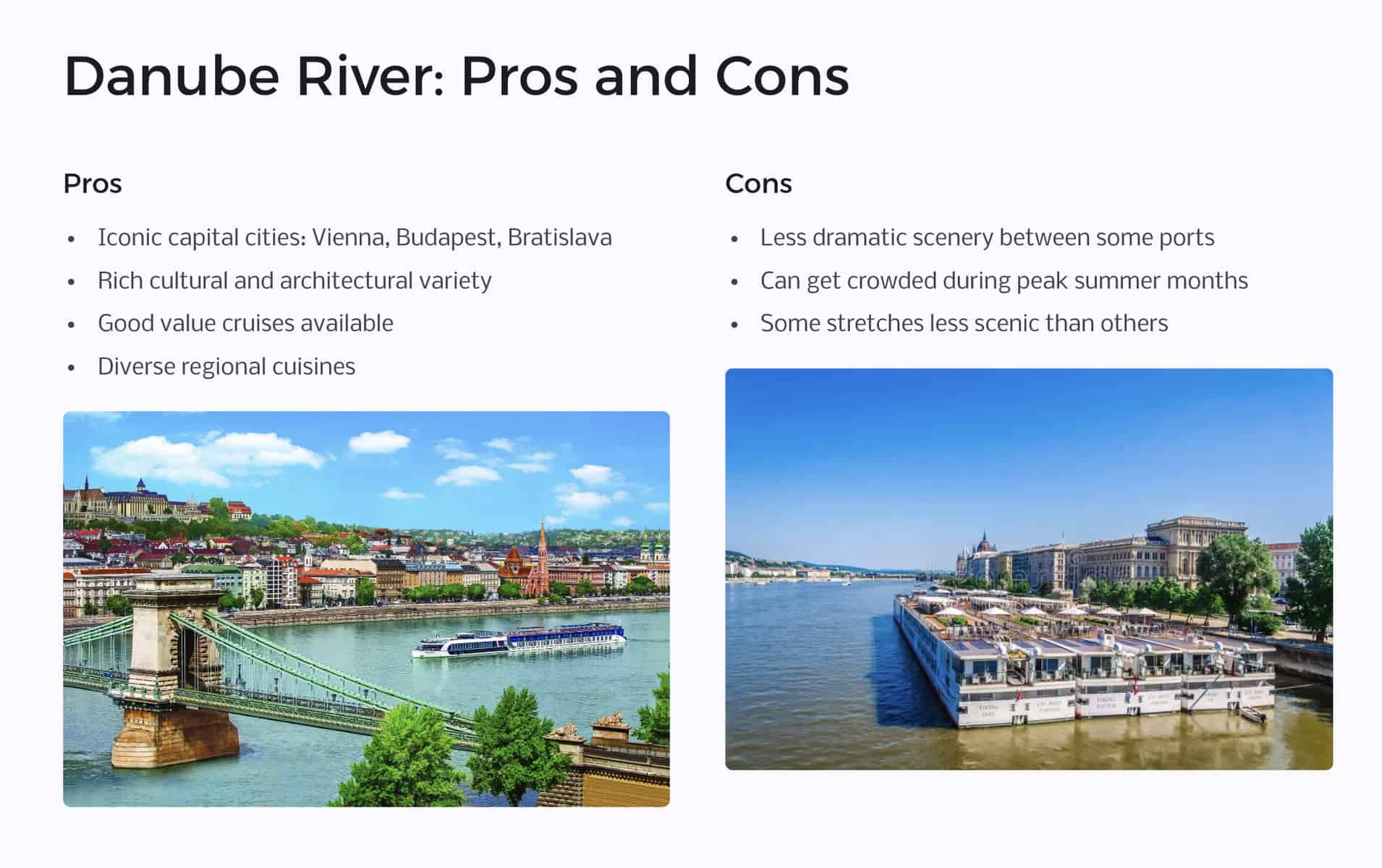
Danube Pros
- Access to grand European capitals: Vienna, Budapest, Bratislava
- Rich in architecture, classical music, and historic diversity
- Multi-country itinerary, including Hungary, Austria, Slovakia, and Germany
- Good value with many river cruise companies operating here
- Scenic towns, castles, and cathedrals along the river
Danube Cons
- Can be busy during peak season with multiple river cruise ships docked simultaneously
- Less scenic cruising between stops compared to the Rhine
- Fewer direct flights to Budapest from some U.S. cities
Rhine Pros
- Spectacular scenic cruising with castles, vineyards, and storybook towns
- Easy access via major airports in Amsterdam and Zurich
- Ideal for Christmas market cruises with festive towns and markets
- More direct flight options to Amsterdam from U.S. cities
- Cozy medieval history and charming wine regions
Rhine Cons
- Fewer large cities and metropolitan energy compared to the Danube
- Not as focused on grand capitals or classical music culture
Flight Logistics and Accessibility
Getting to your river cruise start or end point is an important factor. For the Danube, cruises usually start or end in Budapest or Munich, with some round-trip options from Budapest. For the Rhine, Amsterdam and Zurich (near Basel) are the typical airports.
Generally, the Rhine offers slightly easier and sometimes cheaper flights, with more direct options to Amsterdam. For example, flights from Dallas to Amsterdam often include nonstop options, while flights to Budapest typically involve at least one stop and can be slightly more expensive.
However, flight availability depends on your departure city, and both cities are accessible with reasonable connections. Also, many river cruise lines offer discounted airfare packages, but it’s wise to compare these offers with booking flights independently to find the best deal and routing flexibility.
Food, Wine, and the Best Time to Cruise
If you love food and wine, you can’t go wrong with either river cruise. Central Europe is renowned for its culinary delights and wine regions, whether in Germany, Hungary, or Austria. River cruise ships also offer exceptional dining experiences, often customizing menus to reflect local flavors and ingredients.
For the best prices and fewer crowds, spring and fall are ideal cruising seasons. Summer is popular but busier, with more boats on the river and lively cities. Winter cruises, especially during the Christmas markets, offer a magical holiday experience — just be sure to dress warmly and in layers for the cold weather.
Top River Cruise Lines for the Danube and Rhine
We’ve sailed with five major river cruise lines on these rivers, each offering unique experiences:
- Viking: Known for consistency, a wide range of itinerary options, great value, and many inclusions.
- AmaWaterways and Avalon: Focus more on active tours and offer distinct experiences; Avalon is famous for its panoramic suites.
- Uniworld and Tauck: Premium, boutique-style ships with fewer passengers and more personalized service, but at a higher price point.
Choosing a river cruise line that fits your travel style can make a big difference, so consider what matters most to you — whether it’s inclusions, ship size, activity level, or luxury.
Which River Is Right for You?
Here’s a quick guide to help you decide:
- Choose the Danube if you love: grand palaces, classical music, rich cultural diversity, architectural beauty, and historic European capitals.
- Choose the Rhine if you love: castles, vineyards, cozy medieval towns, scenic cruising, Christmas markets, and charming wine regions.
Both rivers offer fantastic experiences, and many travelers enjoy doing one river on their first trip and the other on their next. Each cruise is a new adventure filled with unique sights and memories.
Frequently Asked Questions
Which river cruise is better for first-timers?
Both the Danube and Rhine are excellent for first-timers, but the Rhine often offers more scenic cruising and charming towns, while the Danube provides grand capitals and rich history. Your choice depends on what appeals most to you.
Are river cruises on the Danube or Rhine more expensive?
The Danube often offers better overall value due to a larger number of river cruise companies operating there. However, prices vary depending on the cruise line, itinerary, and season.
When is the best time to take a European river cruise?
Spring and fall offer better prices and fewer crowds. Summer is lively but busier, and winter is magical for Christmas market cruises.
How easy is it to fly to the start and end points of these cruises?
The Rhine’s start/end points in Amsterdam and Zurich generally have more direct flights and slightly easier access. The Danube’s Budapest and Munich airports are well connected but may require more connections depending on your departure city.
Which cruise lines are recommended for the Danube and Rhine?
Viking, AmaWaterways, Avalon, Uniworld, and Tauck are all excellent choices. Your preference depends on your desired level of luxury, activity, and inclusions.
Ready to Book Your Dream River Cruise?
Now that you know the key differences between the Rhine and Danube river cruises, you can confidently choose the itinerary that fits your travel dreams. Whether you crave the castles and vineyards of the Rhine or the grand capitals and cultural richness of the Danube, a European river cruise awaits to enchant you.
For personalized assistance, exclusive deals, and bonus amenities, consider working with travel experts who have navigated these rivers multiple times. They can help you find the best prices, onboard credits, and the perfect cruise line to match your style.
And if you’re still undecided, sometimes flipping a coin is the best way to start — because either choice promises a fantastic adventure – and you can always do the other river next year!

